More Projects
First in War
First Division Museum at Cantigny Park
/
Wheaton, Illinois
Fifty years of military history. One continuous walk.



The pause before a soldier’s name is read aloud. The weight of a letter that was never answered. These are the places where history actually lives, not in glass cases, but in the body.
First in War had been telling those stories for twenty years. The artifacts were real. The history was honest. But the experience had grown unevenly around its own content. Visitors were arriving at the First Division Museum with more questions than the exhibit was built to answer. They wanted context alongside courage and a way to move through fifty years of military history that honored service without flattening it.
We were asked to reimagine what it could be for the audiences it serves now. That meant auditing every element: content, artifacts, media, scenic environments, and the underlying narrative logic holding it all together. We worked through what to keep, what to rebuild, and what had been missing.
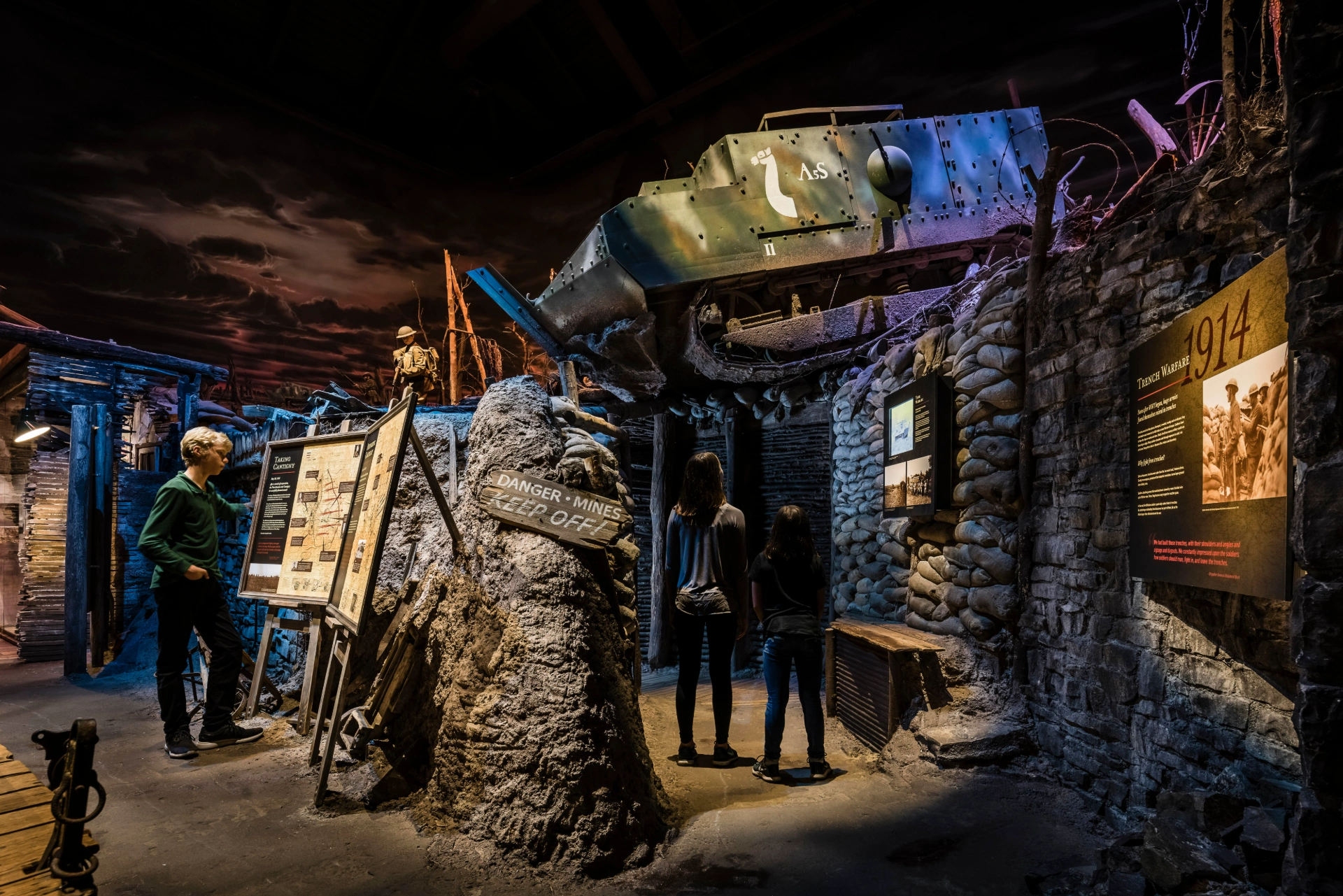
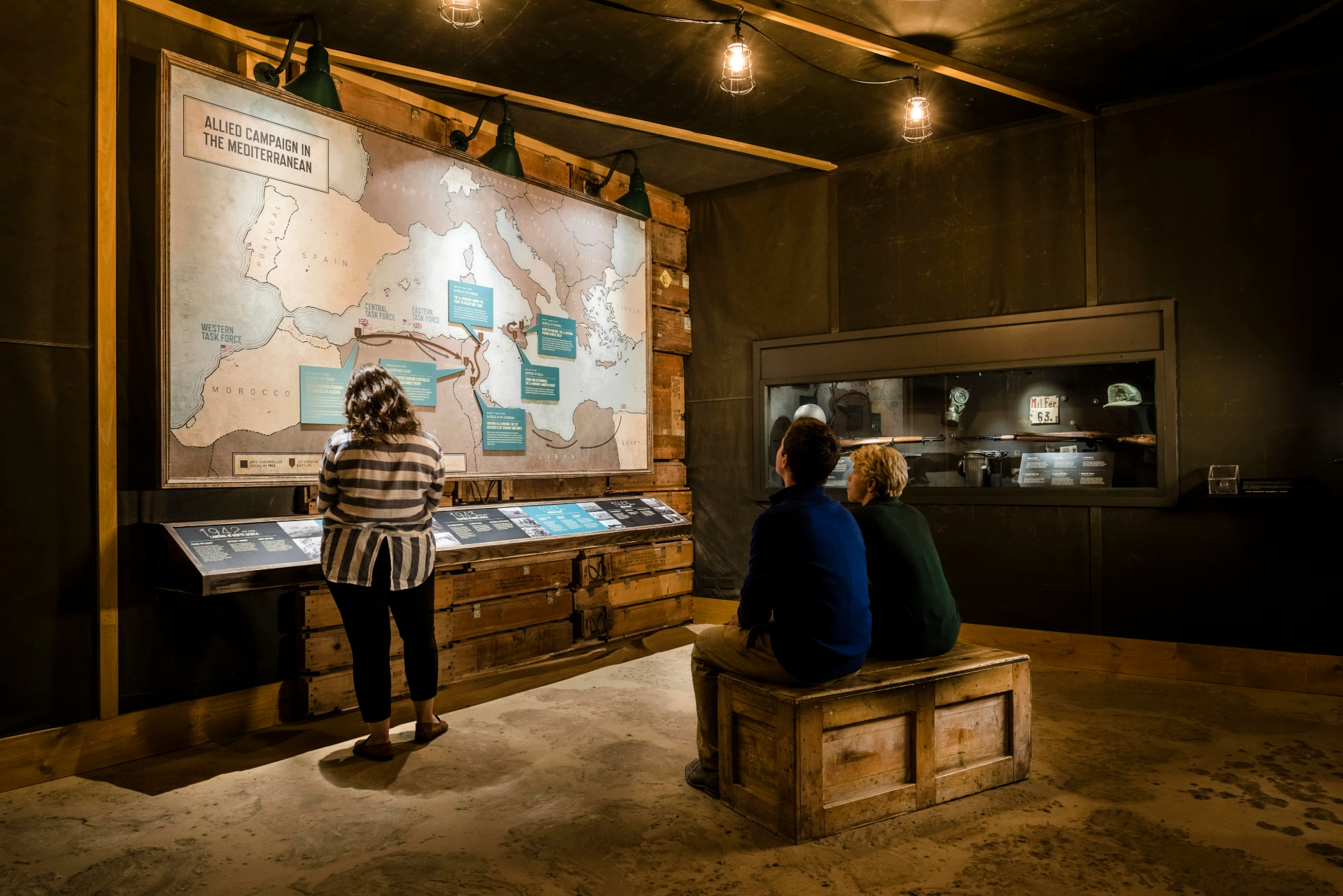
The narrative spine we developed runs from WWI through WWII, the Cold War, and Vietnam. Four eras, one continuous arc built around a single through-line: individual people inside enormous events. Strategy and stakes matter. So does the soldier who wrote home the night before. The exhibit needed both, and it needed them in conversation with each other.
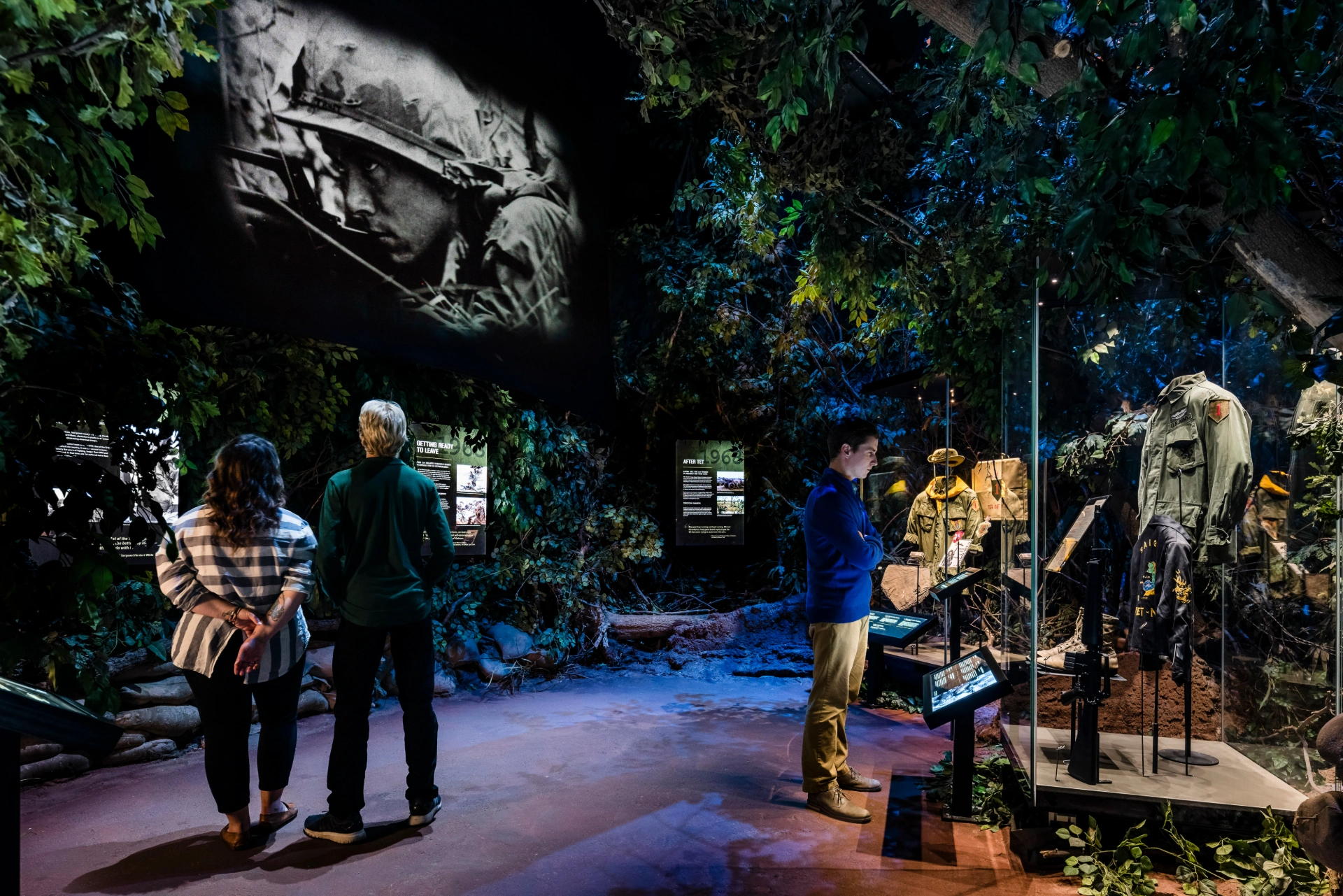
We led content development across the full exhibit and produced five original film experiences. The films anchor the journey, carrying visitors from the trenches of the Western Front to Omaha Beach to the jungles of Southeast Asia through soldiers’ voices and lived moments. Not narration, not summary, but testimony placed in context.
A uniform, a field journal, a set of dog tags are not decorations. They’re documents. Beyond the films, we introduced a new graphic program, rebuilt scenic environments, and designed artifact cases that treat objects as evidence. Every choice foregrounded that difference.
Visitors move through First in War differently now. The weight of what happened to real people in real places doesn’t land as a lesson. It accumulates, the way understanding actually does: slowly, specifically, where it can’t be unlearned.
Partners
Ravenswood Studio, Northern Light Productions, Creative Technology, exhibit writers Barbara Becker and Mike Rigsby

