More Projects
.jpg)
007 Science: Inventing the World of James Bond
Griffin Museum of Science And Industry
/
Chicago, Illinois
Science Fiction. Science Fact.

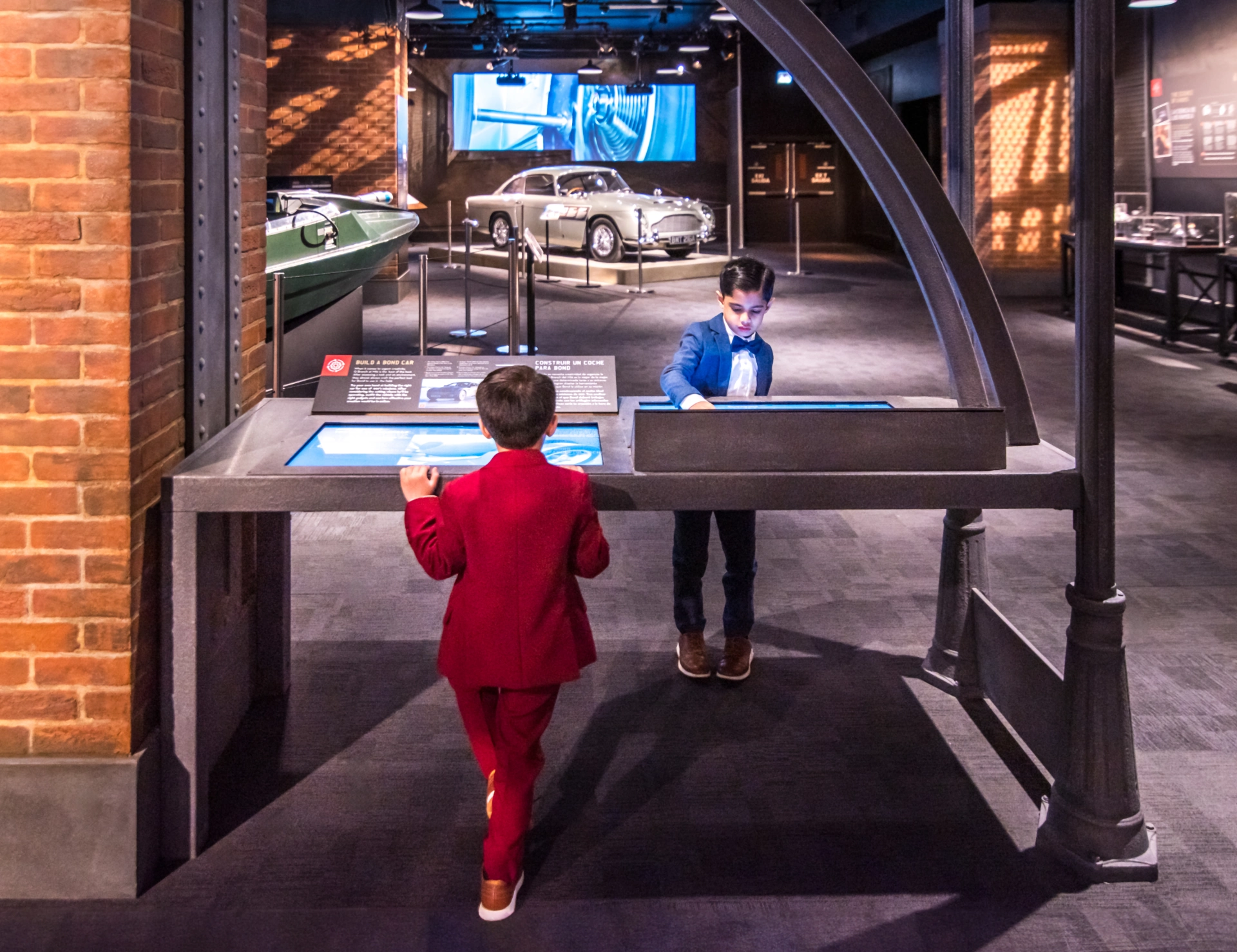
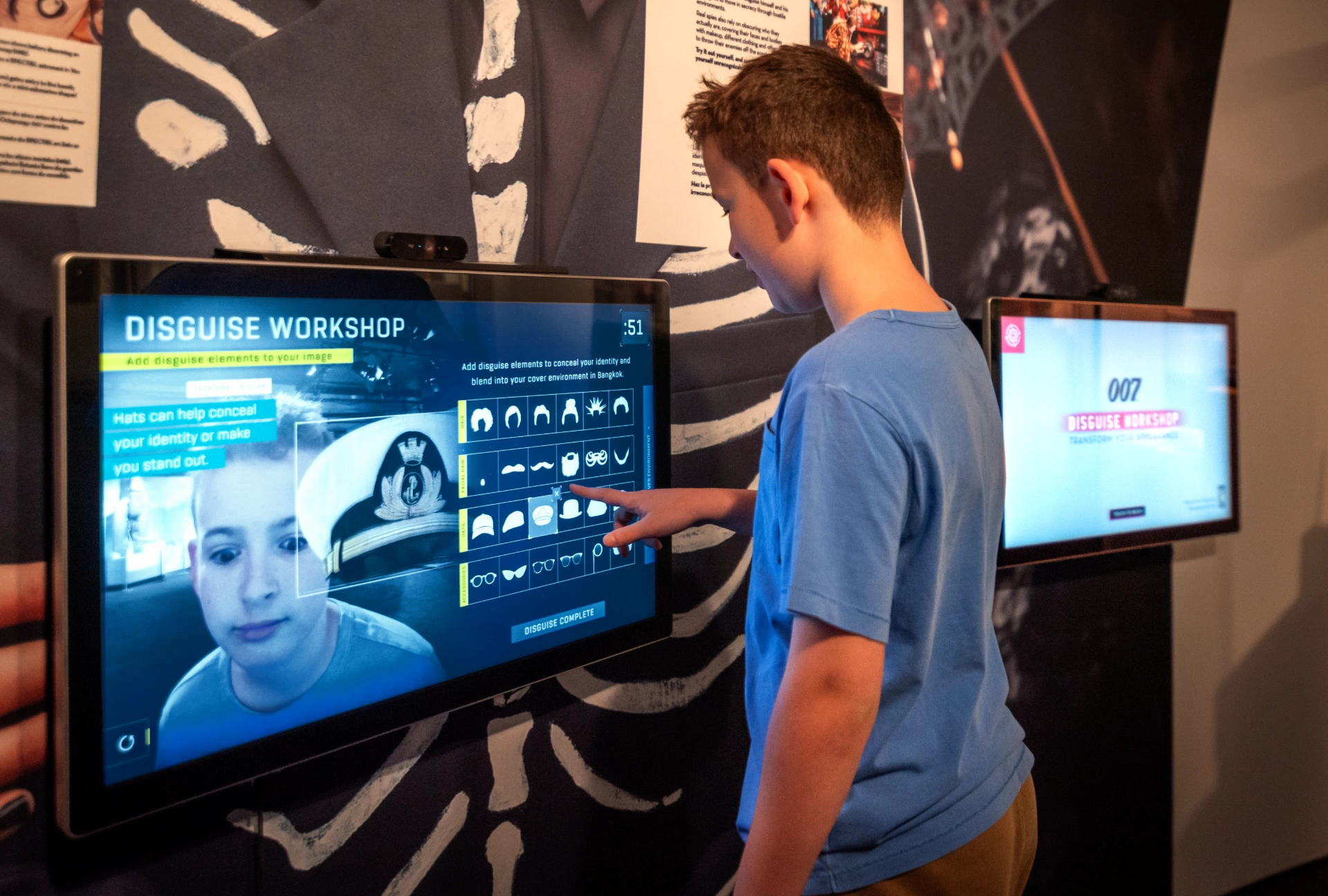
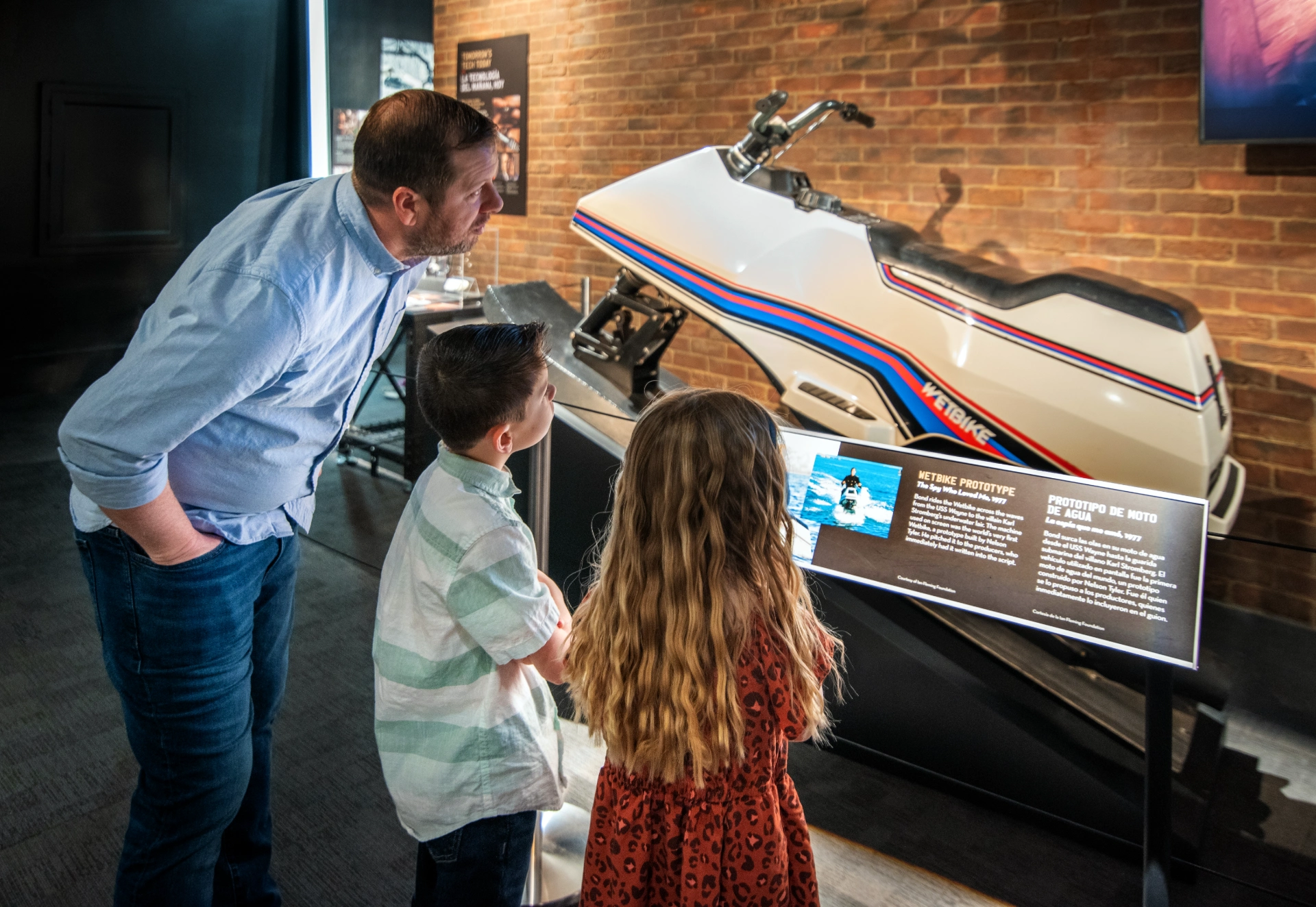
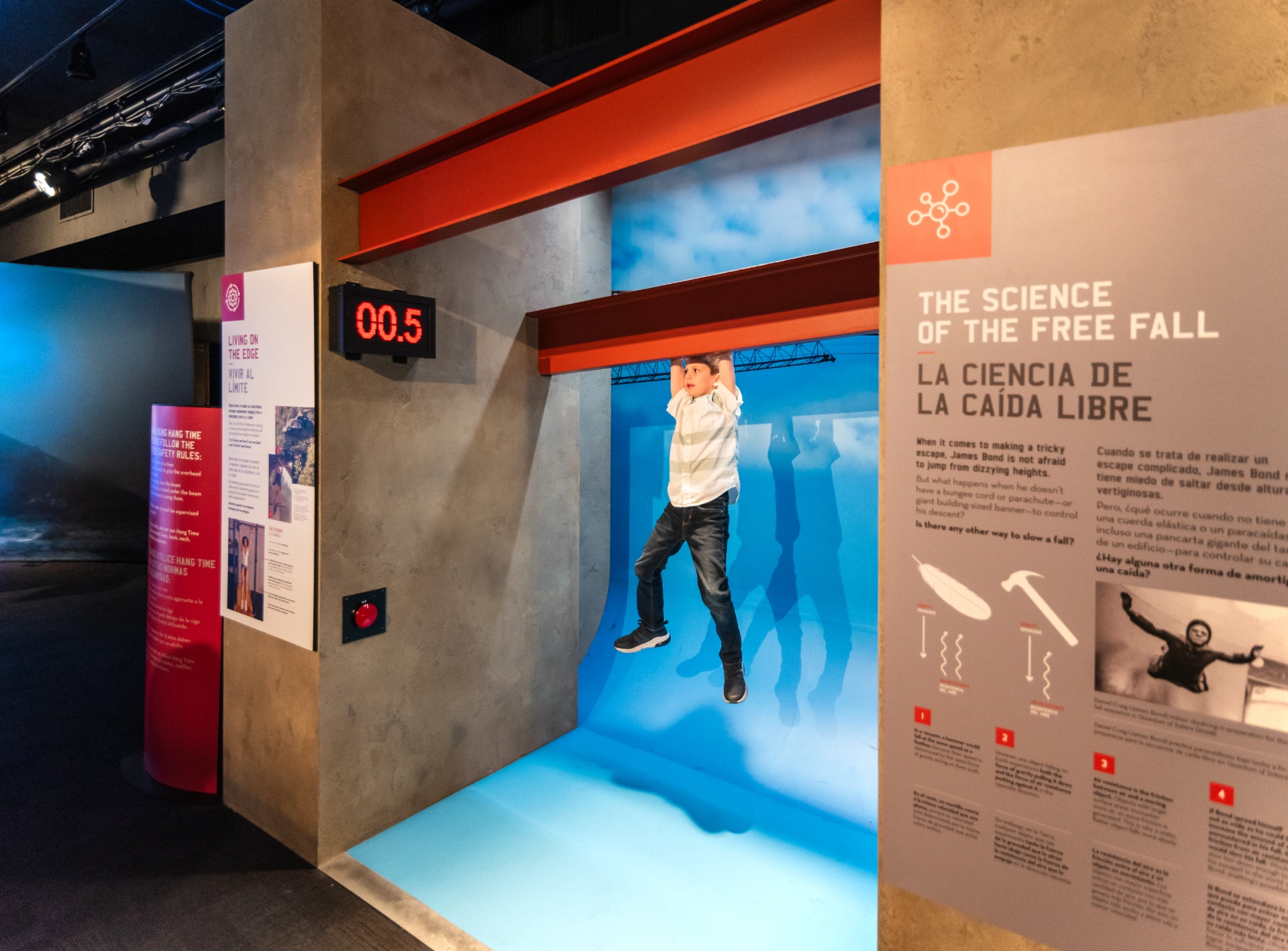
Science fiction is science’s most persuasive collaborator. The stories we tell about what’s possible have a way of making it so. And no franchise does more to populate the collective imagination with tomorrow’s technologies than James Bond. We set out to stage the conversation between the movies and the machinery.
007 Science: Inventing the World of James Bond is the first official exhibition to explore the real science and technology behind cinema’s longest-running franchise. Produced with EON Productions and the Ian Fleming Foundation at the Griffin Museum of Science and Industry, it welcomes families, superfans, and curious makers alike.
Bond audiences know the drill: suspend disbelief, and the show comes alive. They accept the jetpack, the invisible car, the wrist-mounted grappling hook. Willingly. Because the story earns it. The question we kept returning to: how do you invite that same audience to stop suspending disbelief and start interrogating it, without losing what they fell for in the first place? That tension between immersion and understanding shaped every design decision.
Working closely with museum staff, EON Productions, and the Ian Fleming Foundation, we built an experience where Bond’s gadgets are barely fantasy at all. The prototype jetpack from Thunderball, deemed too dangerous for actual use, sits alongside the Gravity Industries Jet Suit that proved the dream viable. Suction-cup climbers from You Only Live Twice pair with real Gecko Gloves engineered to scale walls. Across thirteen vehicles and more than ninety original objects, imagined technologies converse directly with the researchers, institutions, and inventions that made them real.
Visitors move through the exhibit the way Bond moves through a mission: embedded in the action, reading the environment for clues. In Q’s lab, they design their own Secret Intelligence Service vehicles, test the physics of stunt sequences, and explore the materials science behind imagination-shaping gadgets. Production sketches, equations, storyboards, and footage layer the environments, showing how film sets and research labs borrow from each other.
Designing inside a fully realized fictional world meant drawing on the toolkit of great themed entertainment: world-building, character, narrative immersion. As Dr. Chevy Humphrey, President and CEO of the Griffin Museum of Science and Industry, put it: “The James Bond universe lies at the intersection of science fiction and science fact.” That intersection is exactly where the experience lives.
Visitors leave different from how they came in: convinced that fiction and science were co-conspirators all along.
Partners
Ravenswood Studio, RLMG, Chinagraph, Cortina Productions, Angle Park, Morlights

