17 Jul 24
Every visitor arrives with a different definition of a good day. Here is how we plan for all of them.
I spent a week racking up a serious credit card bill building my six-year-old the perfect vacation. His favorite part cost five dollars.
In an act of reckless abandon, I planned an elaborate, larger-than-life Spring Break for my animal-loving son. I really went for it: in one week, I managed to shove in airboats on the Everglades and cradling baby crocodiles, kayaking with manatees in mangrove forests, encounters with lemurs, capybaras, Aldabra tortoises, giraffes, a legion of birds, a rhino he helped bathe, and a nurse shark feeding that sucked its food in so loud it almost sounded like a firework. On the plane home, I asked him about his favorite part of our trip.
His reply? The "Mold-a-Rama" machine.
A cheap, low-resolution wax figurine he picked, watched form, and carried away from a vending machine still warm.
As a professional experience designer, I was both baffled and offended. I had planned a once-in-a-lifetime trip, and here he was excited about something we've seen in dozens of attractions. Then I realized the hard truth:
My son had no control for a week. I was so thorough, and so excited, that I shoved him from one thing to the next.
He was a hostage on his own vacation.
The Mold-A-Rama was a moment of real agency, of creation, and of transformation. He watched it emerge because he pushed a big red button.
This comes up a lot in experiential work: we design for what we find compelling, and then we're surprised when visitors want something else entirely.
Many Definitions of "Success"
Each visitor arrives at an experience with a wildly different definition of success. A parent who brought their family to a museum or attraction might be on a quest for an amazing photo; they want proof they are building special memories. Someone else might be committed to learning something, being a "responsible parent," and pulling them away from screen time. A passionate fan or scholar wants to deep dive, while a newbie is just looking for an introduction. A kid probably just wants something fun. None of these are wrong. But if you're not designing for all of them, some will leave the experience unsatisfied. This is what's so profoundly different between brands and institutions. Marketers can pinpoint with laser precision who is most likely to walk through their doors, but for most experiences, it's a free-for-all. Anyone can potentially walk through your door: locals, tourists, casual fans, non-fans being dragged there by die-hard fans, deep scholars.
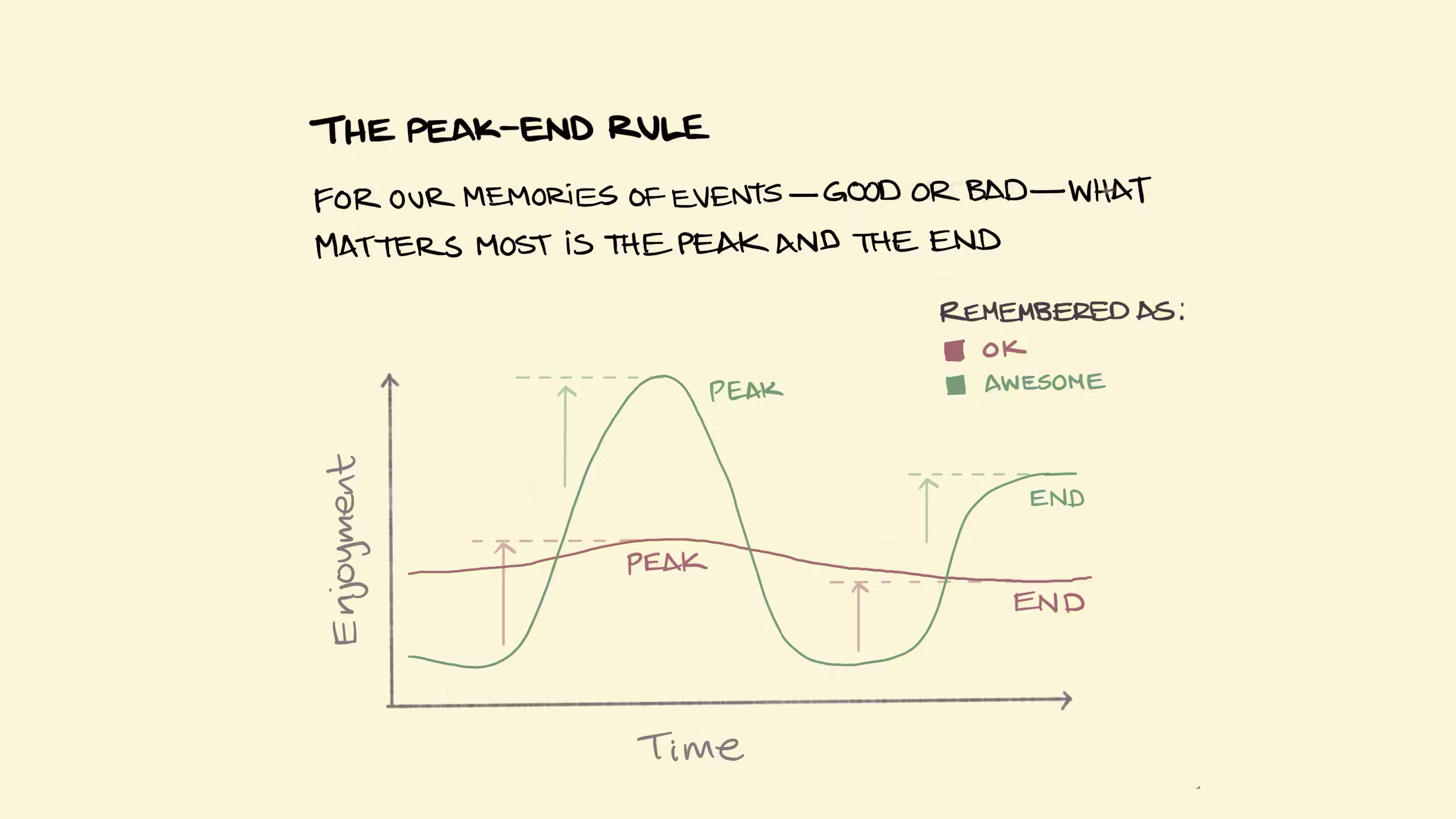
That's why Daniel Kahneman's ‘Peak-End Rule’ is so critical. Memories of an experience are overwhelmingly shaped by the highest emotional moment and how it ended, not the average of everything in between. (We remember the fireworks and laughter at Disney World, not the 14 hours of lines and sore feet). A visitor who hit one genuinely extraordinary section will often remember the whole visit well, even after a rough start. A three-hour experience with no highlights is hard to recall, regardless of its quality.
After decades of living with these questions, Luci has developed a unique approach to addressing this breadth: We ask, "What is the peak moment for each type of visitor in this space, and can we name it?", and then we plot it out in a matrix of major touchpoints across the top, and real visitor types down the side.
Whenever possible, we try to avoid proto-personas, and instead lean into the data, the actual people who we know inhabit the space. We plot which elements land for which visitors. Inevitably, some of the ideas have very few rows filled in. But that doesn't (necessarily) mean cutting them. It means choosing: invest more to broaden their reach, position them for the audience they actually serve, park them for year five, or treat them as rotating programming rather than permanent square footage.
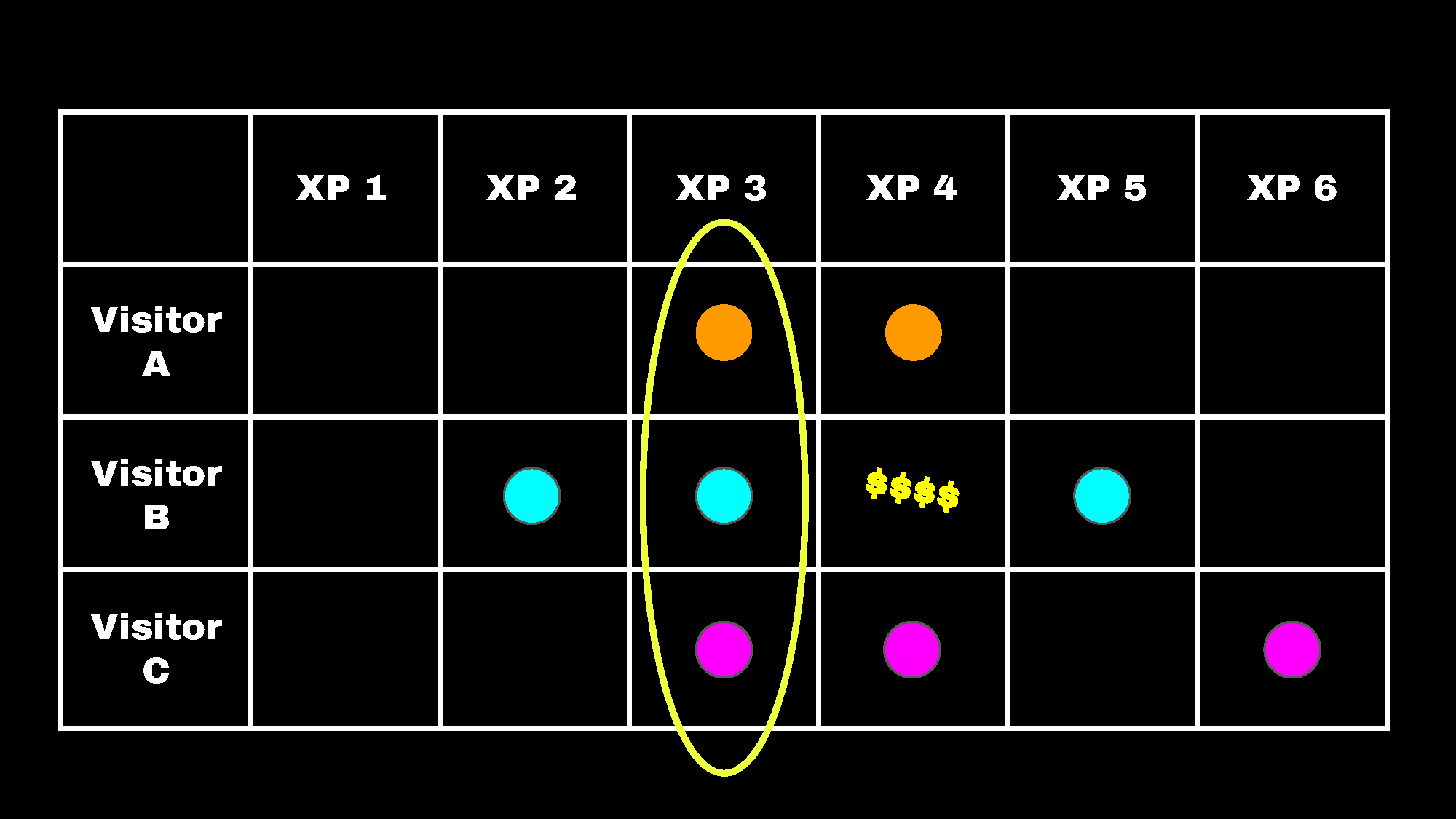
This also helps with a different problem: so many decisions in this work are emotionally driven. Someone has a story they need to tell. A message that has to land. The matrix doesn't replace that instinct. It gives our clients a shared and more objective way to test where an idea actually lands, together, instead of arguing from passion alone.
We spend a lot of time designing the extraordinary. But we have to remember to ask the hard questions: Are we leaving enough room for our visitors to find their own version of it?