Mars: The Next Giant Leap
Pittsburgh, PA
Some exhibitions inspire wonder. This one opens with a provocation: Why explore other worlds when our own needs help?
KEY INFO
Client
Kamin Science Center
Scale
7500 sqft / 700 sqm
Partners
Electrosonic, Ravenswood Studio, RLMG
Concept
Mars: The Next Giant Leap launches a refreshed vision for Kamin Science Center, reimagining what a space exhibition can be. We listened before we designed.
Community conversations surfaced curiosity paired with real skepticism. Visitors wanted to understand not just how humans might live on Mars, but why we should go at all, and what that pursuit says about life on Earth. We translated those questions into a visitor-led experience that treats the future as a conversation.
“The most ambitious new experience built since the museum’s inception.”
Pittsburgh Tribune-Review
Community and science combined
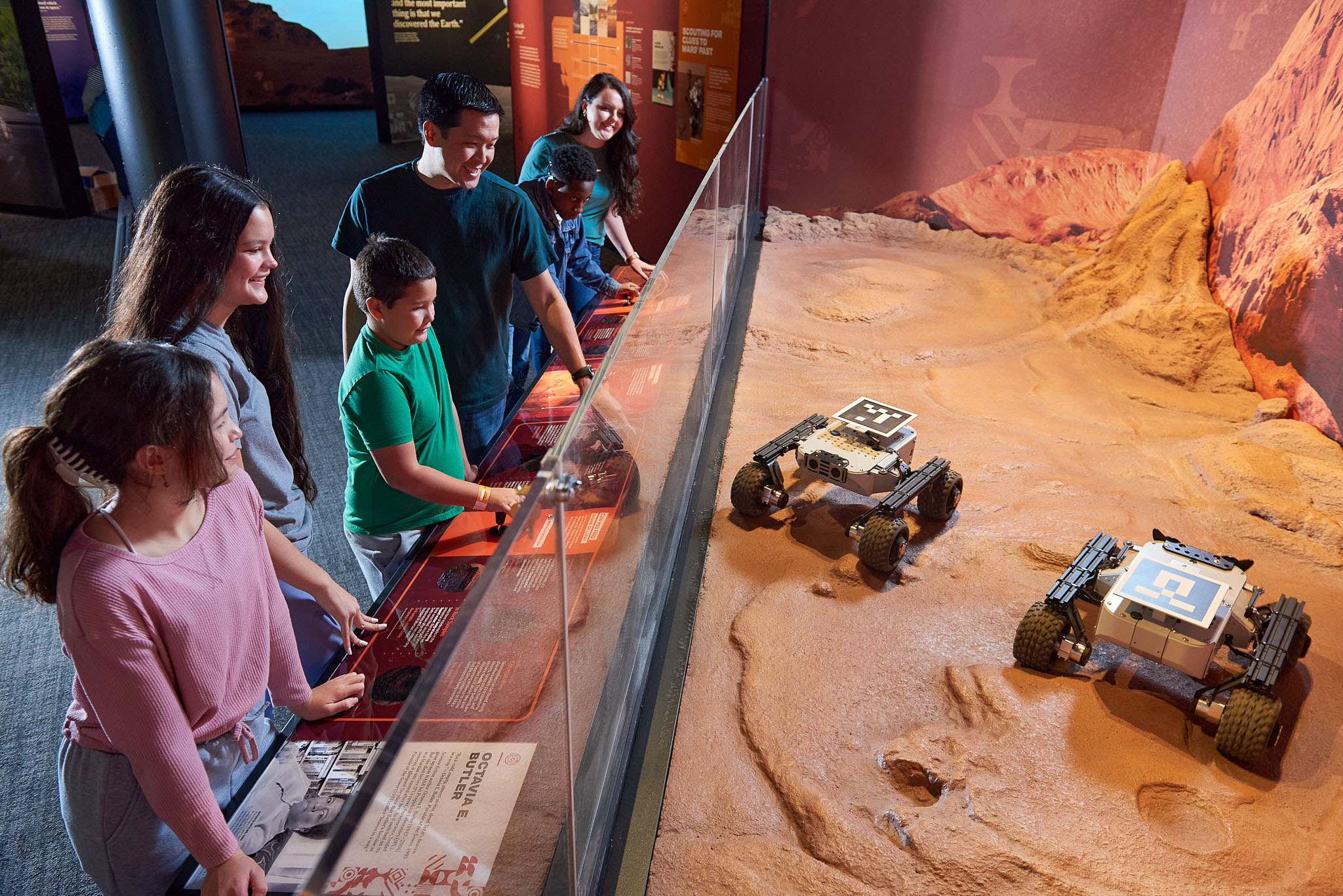
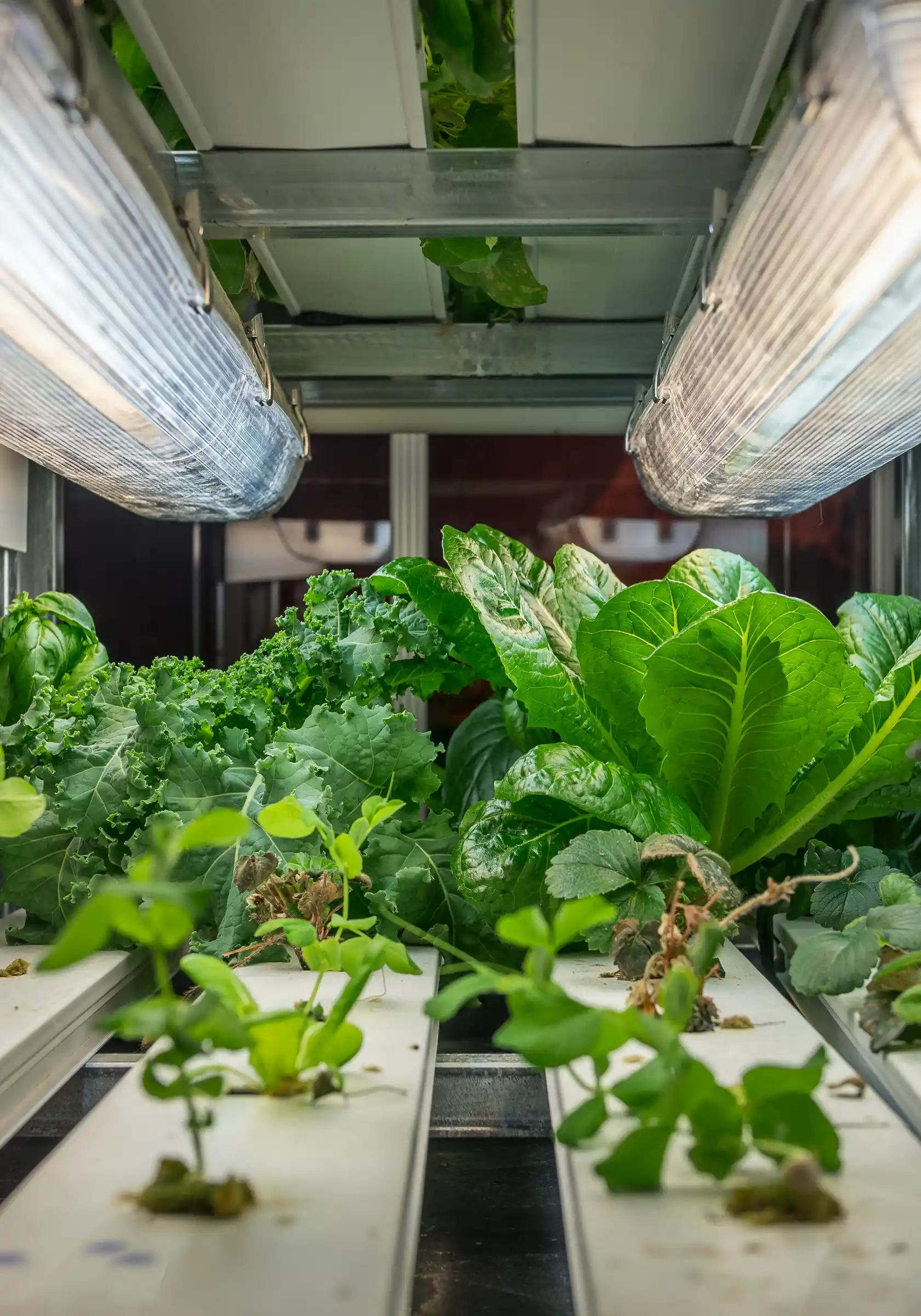
The exhibition unfolds across environments that feel vast and futuristic, yet grounded in everyday decision-making. Visitors pilot rovers in the search for water and signs of life. They compare Earth and Martian climate systems through large-scale visualizations. They test how changing environmental conditions affect survivability. In the Martian Garden, they reimagine familiar meals using Martian-grown ingredients, linking the challenge of feeding a space settlement to real questions of sustainability, resource access, and food systems on Earth.
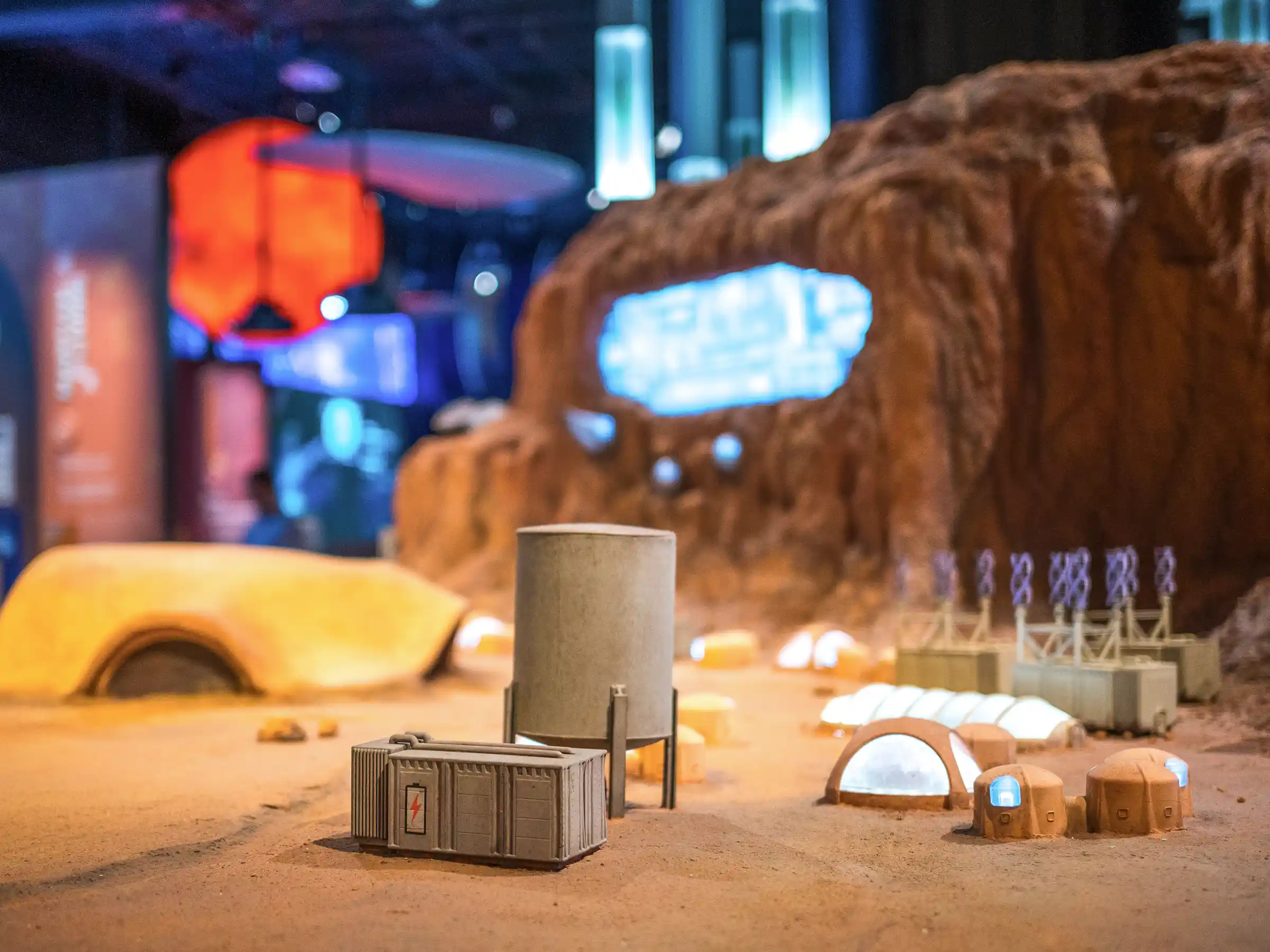
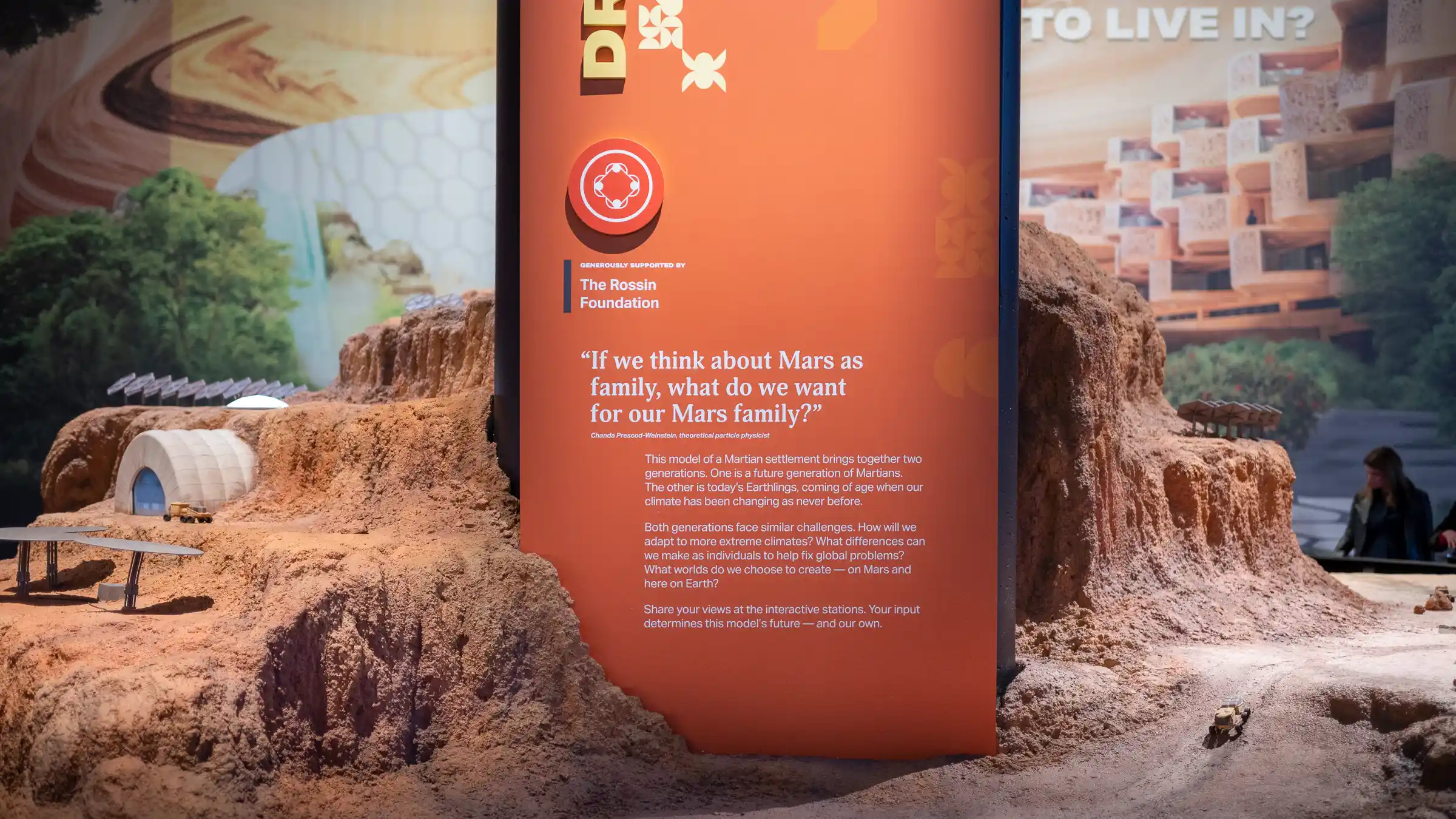
The experience puts as much weight on the community as on science. Visitors design habitats and build a Martian settlement that evolves with every visit, shaped by collective decisions about governance, equity, and responsibility. What does it mean to create a place where people feel safe, represented, and connected? Science helps navigate those choices.
Pittsburgh in Space
A dedicated “Pittsburgh in Space” section roots global ambition locally. Astrobotic, headquartered in Pittsburgh, is building the next lunar lander. Carnegie Mellon’s robotics work has helped turn a city once defined by steel into one of the world’s leading hubs for autonomous systems. Visitors meet those neighbors and find themselves active participants in the mission, not distant observers.
We don’t ask visitors to accept the science and then care. We start with what they already bring: fairness, ingenuity, sustainability, and shared responsibility. The science follows. So does Mars.
The exhibition won the ASTCRoy L. Shafter Award for Visitor Experience. We’re proud of that. But the thing we’re most proud of is harder to quantify: visitors leaving with Mars on theirminds and Earth in sharper focus.